What Beer Brewing Equipment Is Needed to Start a Microbrewery?
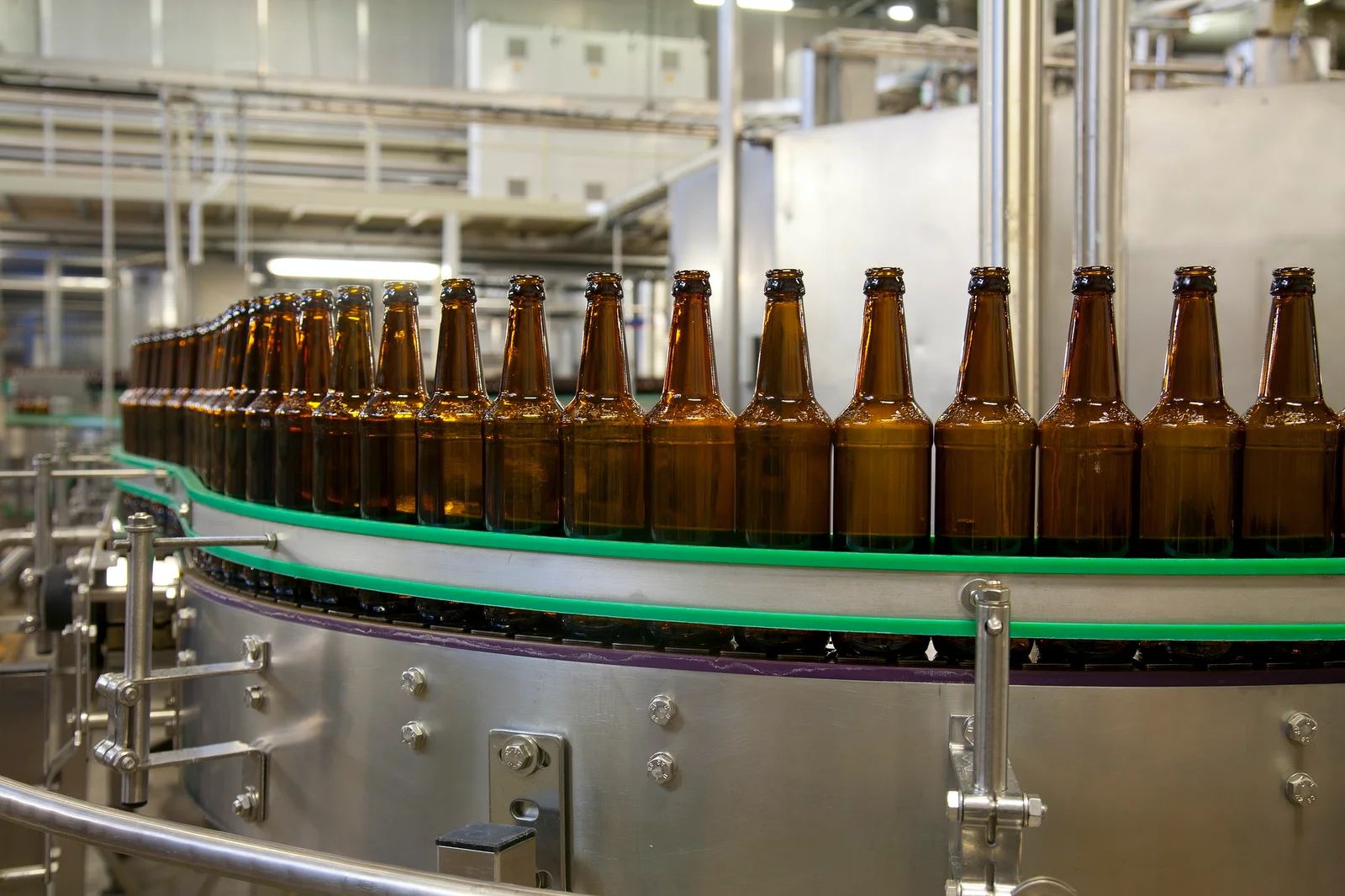
A microbrewery needs a brewhouse, malt mill, hot-liquor tank, wort heat exchanger, fermenters, bright beer tanks, glycol chiller, CIP equipment, pumps, sanitary piping, water treatment, CO₂ supply, and kegging or canning equipment. A 10 BBL brewhouse makes about 310 US gallons, or 1,173 L, per nominal batch. Six 20 BBL fermenters provide 120 BBL of nominal cellar capacity, allowing two 10 BBL brews to fill one tank. Fermentation commonly occupies a vessel for 7–21 days, so cellar capacity usually limits output before the brewhouse does. Equipment should therefore be sized around annual barrel volume, batches per week, tank residence time, and packaging volume rather than brewhouse size alone.
A brewery starts with malt handling because every brewhouse cycle depends on a consistent grist. A 10 BBL batch may use roughly 500–800 lb of malt for many standard-strength beers, with stronger recipes requiring more; a mill rated at 1,000 lb per hour could process a 700 lb grain bill in about 42 minutes at its rated throughput. A two-roller mill is common in smaller plants, while larger installations may add a grist case, auger, weighing station, and dust collection.
Once the grain is prepared, the brewhouse has to convert its starch into wort without creating a scheduling bottleneck. A 5 BBL system has a nominal batch volume of about 155 US gallons, a 10 BBL system about 310 gallons, and a 20 BBL system about 620 gallons because one US beer barrel equals 31 gallons.
| Nominal brewhouse | Volume per batch | Typical production approach |
|---|---|---|
| 5 BBL | 155 gal / 587 L | Taproom and small local draft program |
| 10 BBL | 310 gal / 1,173 L | Taproom plus local distribution |
| 20 BBL | 620 gal / 2,347 L | Higher-volume draft and packaged beer |
Volume alone does not describe brewhouse output. A two-vessel system usually combines functions such as mash/lauter and kettle/whirlpool, while three- and four-vessel layouts separate more operations and can support overlapping processes; by 2026, equipment planning still has to account for the actual building, utilities, production method, and applicable local requirements rather than relying on a nominal BBL rating.
Mash temperature control comes next because enzyme activity changes with temperature and time. Many infusion mashes operate roughly within 148–158°F (64–70°C), while a brewhouse may use steam jackets, electric heating, or another approved heating arrangement to hold the selected profile. Agitation, temperature-probe placement, insulation, and water dosing affect how evenly a several-hundred-gallon mash reaches its set point.
After conversion, the lauter section has to separate wort from grain without extending the brew day. A false bottom supports the grain bed, while rakes, sparge arms, differential-pressure monitoring, and controlled wort collection help maintain flow; a brewery completing 2 brews per day has much less tolerance for an extra 45–60 minutes of lautering than a brewery producing only 3 batches per week.
The kettle then has to heat the full wort volume at a rate that matches the production schedule. A brewery running a 10 BBL brewhouse twice daily processes roughly 620 nominal gallons before normal process losses, so heating capacity affects both the first batch and the start time of the second. Steam-heated systems also require boiler capacity, piping, condensate handling, ventilation, and installation that complies with local codes.
The brewhouse should be specified by usable output per working day, not only by the capacity stamped on the vessel.
Hot-water storage becomes important as batch frequency rises. Brewing water is needed for mashing and sparging, while hot water recovered from wort cooling may be stored for later use; breweries also consume water during tank rinsing, CIP cycles, floor cleaning, packaging, and keg washing. The Brewers Association maintains dedicated water and wastewater guidance because brewery water use extends well beyond the liquid that remains in packaged beer.
That water requirement connects directly to wort cooling. A sanitary plate heat exchanger must reduce wort from near-boiling temperature to yeast-pitching temperature during knockout, and its actual performance depends on wort flow, cooling-water temperature, plate area, and available chilled-water capacity. Cooling 10 BBL in 45 minutes requires an average wort flow of about 6.9 gallons per minute; reducing the same transfer to 30 minutes raises average flow to about 10.3 gallons per minute.
Once chilled wort enters the cellar, fermenter count becomes more important than brewhouse volume. Six 10 BBL fermenters provide 60 BBL of nominal tank capacity, whereas six 20 BBL tanks provide 120 BBL; a 10 BBL brewhouse can fill each 20 BBL tank with two brews if the brewery's procedures and tank design support that production method.
Tank occupancy should be calculated before purchasing vessels. If an ale occupies a fermenter for 14 days and the brewery has six 10 BBL tanks, theoretical cellar turnover is much lower than a setup where the average residence time is 8 days; lager production can hold tanks considerably longer, reducing annual turns without changing brewhouse capacity.
Fermenter specifications also need more detail than nominal volume. A buyer should compare gross volume, working volume, headspace, vessel diameter, overall height, cooling-jacket area, insulation, cone geometry, pressure rating, sample valve, racking arrangement, spray device, and sanitary connections. A nominal 20 BBL tank cannot be assumed to accept exactly 20 BBL of wort under every fermentation procedure.
Bright beer tanks sit downstream from fermentation and can be used for conditioning, carbonation, clarification, storage, and packaging supply. A brewery filling cans for 8 hours may benefit from a dedicated BBT because packaging can continue without occupying a fermenter, while a draft-focused operation may package directly from suitable unitanks and use fewer bright tanks.
Cooling equipment has to serve all of those tanks at the same time. A glycol system normally includes a chiller, reservoir, pumps, insulated supply and return lines, tank valves, and temperature controls; sizing should account for simultaneous fermentation heat, cold crashing, BBT cooling, piping heat gain, and local ambient conditions rather than adding vessel volumes together.
A brewery with eight fermenters may have several tanks maintaining fermentation temperature while one tank drops from roughly 68°F to near 34–38°F. That cold-crash period can create a much larger refrigeration demand than steady temperature maintenance, so a chiller that appears adequate during normal fermentation may recover too slowly during peak cooling periods.
Cleaning equipment follows refrigeration because every tank needs repeatable sanitation between batches. A mobile CIP cart may suit a small brewery, while higher-volume plants can use multi-vessel CIP skids with dedicated caustic, rinse, or recovery tanks. Flow, spray-device pressure, chemical concentration, contact time, and solution temperature have to match the vessel and cleaning chemical manufacturer's procedures.
Pumps, hoses, valves, and process piping then connect the individual machines into a usable brewery. Sanitary centrifugal pumps are widely used for water, wort, beer, and cleaning circulation where suitable, while valve selection depends on isolation, sampling, pressure control, flow direction, and cleaning requirements. Even a 2026 installation with automated controls still needs enough hose length and correctly positioned connections to reach tanks without placing hoses across major walking routes.
Water treatment should be specified from an actual water report rather than purchased as a standard package. Brewers may need sediment filtration, activated carbon, softening, reverse osmosis, UV treatment, or mineral adjustment depending on hardness, alkalinity, chlorine or chloramine, iron, and the intended beer styles; reverse osmosis is useful when a brewery wants a low-mineral starting water but is not required for every source.
Packaging then determines another large part of the equipment list. A draft-focused brewery may start with a keg washer and filler, whereas retail packaging adds a can rinser, CO₂ purge, filler, seamer, date coder, labeler, conveyors, pack-out tables, and quality-control tools. A filler rated at 30 cans per minute has a theoretical rate of 1,800 cans per hour, but cleaning, product changes, stops, and operator handling reduce practical hourly output.
For buyers comparing complete systems, hgmc beer equipment can be considered alongside other suppliers when reviewing vessel sizes, brewhouse configuration, cellar equipment, utility requirements, automation, spare parts, documentation, and installation support. Supplier quotations should use the same working volume, pressure rating, material specification, surface-finish requirement, electrical standard, and included accessories before prices are compared.
Gas equipment deserves the same engineering attention as liquid handling. CO₂ is commonly used for carbonation, purging, transfers, and packaging, and a brewery may require cylinders or bulk storage, regulators, distribution lines, pressure gauges, and point-of-use controls. OSHA lists an 8-hour carbon-dioxide permissible exposure limit of 5,000 ppm, while its referenced short-term values include 30,000 ppm, making ventilation and appropriate CO₂ monitoring important around fermentation and packaging areas.
The building must support the equipment before any tank is delivered. Door width, ceiling height, floor loading, drainage, floor slope, hot-water discharge, electrical service, gas supply, ventilation, refrigeration placement, and maintenance clearance should be checked against final equipment drawings. A 12-foot vessel is unusable in an 11-foot clear-height room even when its BBL capacity perfectly matches the production plan.
Drainage deserves early attention because brewing moves large amounts of water through a relatively small production area. Trench drains or appropriately placed floor drains need to serve the brewhouse, cellar, CIP area, and packaging zone, while floors must tolerate repeated exposure to water, cleaning chemicals, and operating temperatures specified for the facility.
The production model can then be tested with simple capacity math. A brewery targeting 1,500 BBL of saleable beer per year and averaging 9 BBL packaged from each nominal 10 BBL brew would need about 167 batches annually; across 50 production weeks, that is about 3.3 batches per week before allowing for seasonal peaks, maintenance, unsuccessful batches, or changes in product mix.
| Planning input | Example |
|---|---|
| Annual packaged target | 1,500 BBL |
| Nominal batch size | 10 BBL |
| Average packaged volume | 9 BBL |
| Packaged yield vs. nominal | 90% |
| Batches required | ~167/year |
| Production weeks | 50 |
| Average batches | ~3.3/week |
The 90% example should not be treated as a universal brewery yield. Actual losses vary with hop loading, yeast removal, transfers, filtration, tank bottoms, sampling, and packaging, so production planning should use measured yields from the brewery's own recipes once operating data become available.
Regulatory planning belongs beside the physical equipment list. In the United States, a commercial brewery or brewpub must qualify for a Brewer's Notice with the Alcohol and Tobacco Tax and Trade Bureau, and TTB's brewery guidance was updated in 2025; state and local requirements can separately cover zoning, building use, fire safety, wastewater, alcohol licensing, and other operations.
Recordkeeping also affects tank and packaging layout because beer production, storage, packaging, and removal have regulatory consequences. TTB defines a brewery around the premises described in the Brewer's Notice and maintains beer production and inventory reporting requirements; its published beer statistics were updated through 2026, so operators should use current TTB instructions rather than old brewery setup checklists.
Budgeting should therefore cover far more than stainless-steel vessels. A working equipment schedule normally includes the mill and grain transfer system; brewhouse and HLT; heat exchanger; fermenters and BBTs; glycol refrigeration; CIP equipment; pumps, hoses, and sanitary fittings; water treatment; CO₂ and compressed air; laboratory instruments; keg or can packaging; drainage; electrical work; ventilation; cold storage; installation; freight; commissioning; and spare parts.
Capacity for later expansion can be added without buying every tank on opening day. A 10 BBL brewery might initially install six fermenters but size the glycol header, electrical service, floor area, drainage positions, and pipe routes for 10 tanks; moving from 6 to 10 fermenters would add about 67% more vessel count without requiring the production room to be rebuilt around the expansion.
::