How Does Commercial Plywood Compare With MDF?
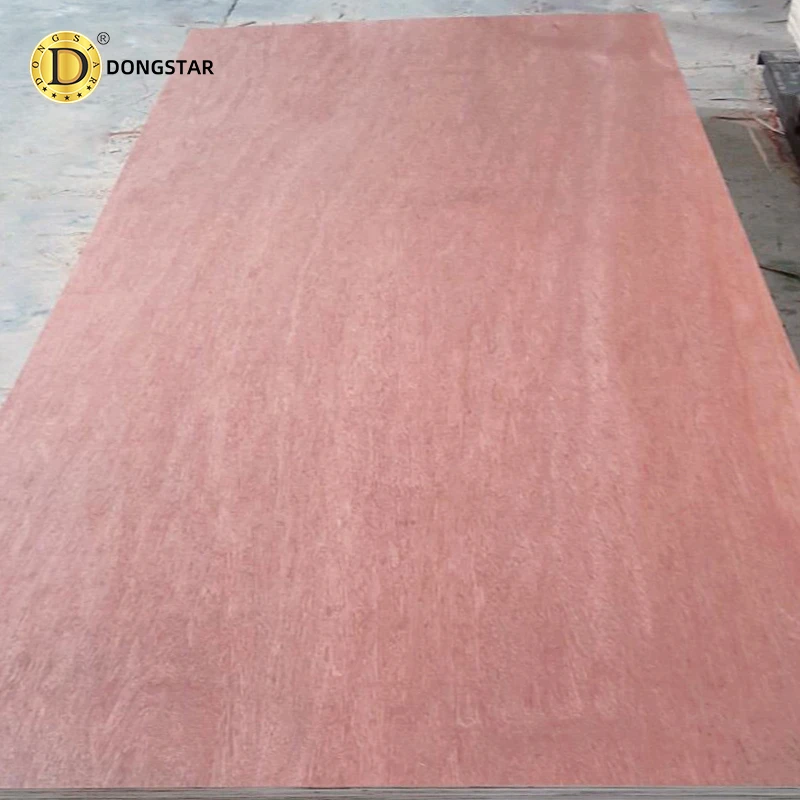
Commercial plywood is usually stronger, lighter, and better at holding screws than MDF, while MDF gives a smoother surface for paint, routing, and decorative furniture parts. An 18 mm, 1220 × 2440 mm MDF sheet made at 750 kg/m³ weighs about 40.2 kg; plywood at 550 kg/m³ weighs about 29.5 kg, around 27% less. Plywood also handles repeated fastening and moderate humidity better when the correct bonding grade is used. MDF remains useful for painted doors and CNC-shaped panels. For U.S. interior products, TSCA Title VI limits formaldehyde emissions to 0.05 ppm for regulated hardwood plywood and 0.11 ppm for MDF.
The difference starts with how each panel is made. Commercial plywood consists of several wood veneers bonded in alternating grain directions, commonly close to 90 degrees between neighboring layers. MDF is made by refining wood into fibers, adding resin, forming a mat, and pressing it under heat. The EPA definition follows the same distinction: hardwood plywood is assembled from veneer layers, while MDF is formed from cellulosic fibers.
That manufacturing difference changes the way each panel behaves under bending stress. Plywood keeps long wood fibers inside every veneer, and alternating grain directions allow stress to move across several layers. MDF distributes material more uniformly, but its fibers are much shorter. For shelving, cabinet bodies, furniture frames, worktables, and large panels fixed with hardware, plywood normally provides more strength for each kilogram of material.
Weight shows the difference clearly. Using the same 18 mm thickness and 1220 × 2440 mm sheet size, a panel at 550 kg/m³ weighs about 29.5 kg. A 750 kg/m³ MDF sheet of identical dimensions weighs about 40.2 kg. The MDF example is roughly 36% heavier than the plywood example, although actual density varies by wood species, panel construction, manufacturer, moisture content, and product grade.
An 11 kg difference per sheet becomes substantial in a 100-sheet furniture order: the finished material can differ by roughly 1.1 metric tonnes before packaging and hardware are added. Lower panel weight can reduce manual handling effort and can also matter for tall cabinet doors, wall-mounted furniture, mobile displays, caravans, shop fittings, and furniture that is assembled more than once.
Fastener behavior is another practical difference. A screw entering plywood passes through wood veneers with continuous fibers. MDF can hold screws adequately through the panel face, but fastening close to an edge requires more care because the compressed fiber structure can split or crumble when the pilot hole, screw diameter, or insertion torque is unsuitable.
Repeated assembly makes the contrast more noticeable. A cabinet hinge may use 4 screws, and a pair of hinges may place 8 fastening points into one door or side panel. Furniture that is dismantled several times can gradually enlarge MDF screw holes. Plywood normally tolerates repeated installation better, although poor-quality plywood with veneer gaps can also provide inconsistent fastening.
Surface finishing moves the advantage toward MDF. Its face is uniform, with no visible grain change, veneer joint, knot, or patch. Painted cabinet doors can therefore require less filling before primer is applied. MDF also machines evenly during CNC routing, which is useful for grooves, recessed door patterns, fluting, lettering, and shaped decorative panels.
Plywood can also be CNC cut, but alternating veneers may leave visible layers on routed edges. Decorative-grade plywood may use this layered appearance as part of the design, while painted components normally need additional filling or edge preparation. A furniture producer making 500 identical painted doors may therefore prefer MDF even when plywood provides higher mechanical strength.
Moisture changes the comparison again. Standard MDF can absorb water quickly through exposed edges, and swelling after wetting may remain after the board dries. Moisture-resistant MDF is manufactured for more humid interior conditions, but the term “moisture resistant” should not be read as “waterproof.” Plywood also varies by adhesive system and intended service class, so a generic commercial label is not enough for wet or humid locations.
For kitchen cabinets, bathroom furniture, utility-room storage, or interiors near exterior doors, buyers should request the exact bonding specification rather than relying on a product name. Thickness tolerance, moisture content, adhesive type, veneer construction, edge sealing, and face treatment can all affect service performance. A 2026 purchase specification should state measurable requirements so that two suppliers are quoting comparable panels.
Material efficiency also changes with panel thickness. A cabinet manufacturer may use 18 mm panels for side walls, 12–15 mm material for some internal parts, and thinner material for backs or drawer components. Substituting MDF for plywood without checking density can make the finished cabinet substantially heavier even when every nominal thickness remains unchanged.
For example, ten 18 mm sheets at 750 kg/m³ contain about 402 kg of MDF. Ten sheets at 550 kg/m³ contain about 295 kg of plywood. That is approximately 107 kg of additional panel weight across only 10 sheets. Hardware specifications, packaging, transport, wall fixings, and installer handling may therefore need adjustment when material is changed after the furniture has already been designed.
The comparison should also include emissions rather than treating both products as generic “wood boards.” Under U.S. TSCA Title VI, regulated hardwood plywood has a formaldehyde emission limit of 0.05 ppm, standard MDF 0.11 ppm, thin MDF 0.13 ppm, and particleboard 0.09 ppm. EPA rules require covered products to be tested and certified through recognized third-party certification arrangements.
EPA requirements have applied to regulated composite wood products since the compliance timetable introduced in 2017, and products covered by the rule have required TSCA Title VI labeling rather than the earlier CARB-only transition labeling after March 22, 2019. Importers buying for the U.S. market should therefore check product labeling, certification status, mill information, lot records, and supporting test documentation rather than relying only on a verbal “low formaldehyde” statement.
European purchasing brings another set of documentation requirements. As of September 2026, the European Commission states that the amended EU Deforestation Regulation will apply from December 30, 2026 to large and medium operators and to micro and small operators previously covered by the EU Timber Regulation, with June 30, 2027 applying to other micro and small operators. Timber-based products within scope require supply-chain information appropriate to their regulatory classification.
That makes supplier documentation relevant when commercial plywood is purchased for European distribution, furniture manufacturing, or construction supply. Importers may ask for species information, country of production, traceability records, declarations, test reports, chain-of-custody documentation where applicable, panel specifications, and shipment-level records before accepting a production order.
Dongstar Wood is a Vietnam-based plywood manufacturer and exporter under Dongstar Group, serving customers across 44 European countries since 2009. We specialize in commercial plywood, film faced plywood, construction plywood, birch plywood, furniture plywood, and customized plywood solutions.
Backed by CE 2+, FSC®, EUDR, DOP, and SEDEX (BSCI) certifications, we meet European standards for quality, sustainability, and compliance. With over 15 years of manufacturing and export experience, we support importers, distributors, furniture manufacturers, and construction companies with reliable plywood supply and OEM/ODM solutions.
Species selection also affects plywood weight and machining. Buyers looking for a lighter furniture panel may work with an Okoume Plywood Supplier because okoume is commonly used where low panel mass, easy machining, veneering, furniture production, or interior joinery are important. Final properties still depend on veneer thickness, adhesive system, panel construction, moisture content, and manufacturing quality rather than species name alone.
Price per sheet should therefore be compared with the amount of processing required after the panel reaches the factory. MDF may cost less for painted decorative parts because its smooth face reduces filling and makes repetitive CNC work predictable. Plywood can cost more initially but may reduce material weight, improve fastening, and allow thinner constructions in applications where engineering data supports the change.
A purchasing comparison can be kept simple:
| Property | Commercial plywood | MDF |
|---|---|---|
| Construction | Cross-laminated wood veneers | Resin-bonded wood fibers |
| Example density used here | 550 kg/m³ | 750 kg/m³ |
| 18 mm sheet weight, 1220 × 2440 mm | About 29.5 kg | About 40.2 kg |
| Difference in example | About 27% lighter | About 36% heavier than plywood |
| Screw holding | Usually better, especially for repeated fastening | Good on faces; edges need more care |
| Painted surface | More preparation may be required | Very smooth |
| Detailed CNC routing | Suitable | Usually easier to machine uniformly |
| Water exposure | Depends on adhesive and plywood grade | Standard MDF is sensitive; MR grades are available |
| Natural wood appearance | Available with suitable face veneers | Requires veneer, laminate, foil, or paint |
| U.S. TSCA Title VI limit | 0.05 ppm for regulated hardwood plywood | 0.11 ppm for standard MDF |
Furniture producers often use both materials rather than forcing one panel into every component. A cabinet can use plywood for side panels, structural shelves, partitions, and areas receiving repeated hardware, while MDF is used for painted doors, decorative end panels, routed fronts, and wall features. A 2026 commercial project may therefore specify several panel types within one product range.
Before ordering, a technical sheet should state panel size, nominal thickness, thickness tolerance, veneer species or MDF density, moisture requirement, surface grade, bonding classification, sanding condition, emission requirement, packing method, and applicable certification. For a 1,000-sheet shipment, even a 0.5 mm thickness difference or a 5% density variation can affect machining settings, finished dimensions, freight weight, and hardware fit.
Commercial plywood is generally better suited to applications that need lower weight, stronger screw retention, greater bending strength, or repeated assembly. MDF is generally better suited to smooth painted surfaces, detailed routing, and highly uniform decorative components. Comparing the actual density, mechanical data, emissions documentation, moisture specification, panel construction, and intended use gives a more reliable basis than comparing the words “plywood” and “MDF” on a quotation.